

Danish businesses can build more reliable data pipelines by connecting data sources carefully, validating information, monitoring processing jobs, and addressing errors before they affect business operations. Databricks supports these workflows by helping organisations ingest, transform, and manage data within a scalable environment for analytics and AI.
Businesses depend on data to manage daily operations, understand customers, and make informed decisions. Sales records, inventory updates, financial transactions, and operational reports all provide information that helps teams understand what is happening across an organisation. However, this information becomes useful only when businesses can collect, process, and deliver it accurately.
For many companies in Denmark, the challenge is not a lack of data. It is making information from different systems work together without creating inconsistencies or delays. A pipeline might stop processing after a source system changes, an unexpected record might affect a report, or a delay in updating information might leave teams working with outdated figures. These problems can affect productivity and reduce confidence in business reporting.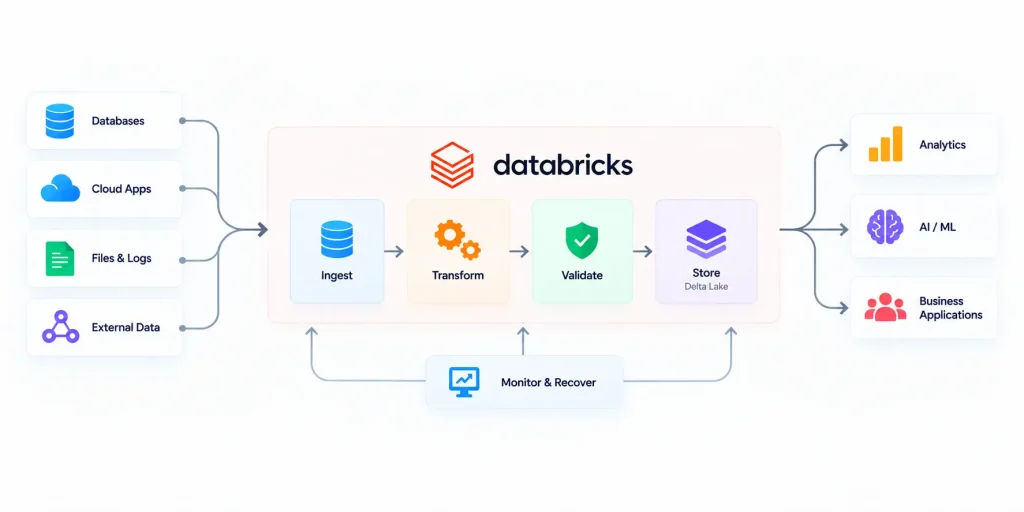
Reliable data pipelines help prevent these issues by creating a structured process for moving information from its source to the systems that need it. Businesses can introduce validation checks, monitor processing jobs, and establish clear procedures for handling errors. When designed properly, these workflows reduce manual intervention and make data easier to maintain.
Databricks offers capabilities that support modern data engineering, allowing businesses to build and manage pipelines for analytics and AI workloads. For Danish enterprises looking to improve their data operations, the priority should be to develop pipelines that remain dependable as data volumes, business requirements, and connected systems change.
Why Do Danish Businesses Need More Reliable Data Pipelines?
Many organisations rely on information from several applications and departments. A manufacturing company may collect production records from equipment, inventory data from warehouse systems, and delivery information from logistics platforms. A financial business may need to combine transaction records with customer information and reporting data. Each source can follow different formats and update schedules, making reliable data processing an important operational requirement.
When these systems do not work together properly, teams may need to correct records manually or investigate why reports show conflicting figures. These tasks take time away from analysis and business improvement. They can also create delays when managers need accurate information to plan production, review performance, or respond to changing customer requirements.
Reliable pipelines help organisations establish consistent processes for collecting, checking, transforming, and delivering information. They make it easier to identify failures, understand where data originated, and investigate unexpected results. For Danish businesses investing in automation and analytics, these improvements can support more dependable operations and better use of existing data.
What Makes a Data Pipeline Reliable?
A reliable pipeline does more than transfer information between systems. It should process data consistently, identify errors, handle changes, and provide enough visibility for teams to understand whether each stage is working as expected. Businesses also need to consider how quickly information must arrive and what should happen when a source system becomes unavailable.
Several practices help establish this reliability. Data validation checks can identify missing fields, unexpected values, and duplicate records before they reach downstream applications. Monitoring can alert teams when processing jobs fail or take longer than expected. Clear logging and documentation make it easier to investigate issues without repeatedly rebuilding the same understanding of the pipeline.
Reliability also depends on maintainable design. When pipelines contain unnecessary dependencies or complicated transformations, even small changes can create unexpected problems. Businesses should organise workflows into understandable stages, document important rules, and test changes before deploying them. These practices help data teams respond to new requirements without compromising existing processes.
How Can Databricks Help Businesses Build Better Data Pipelines?
Databricks provides a platform for developing data engineering workflows that collect, process, and prepare information for different business needs. Organisations can use it to create pipelines that transform raw information into structured datasets for reporting, analytics, and machine learning. This helps teams manage data processing within an environment designed to support a range of data workloads.
For example, a Danish retailer might need to combine sales information from multiple channels with inventory and supplier records. A pipeline can collect these datasets, apply business rules, validate important fields, and prepare the results for forecasting or operational reporting. The specific design depends on the data sources, processing frequency, and business requirements.
Databricks does not automatically make every pipeline reliable. Businesses still need appropriate architecture, testing, monitoring, governance, and operational procedures. The platform provides useful capabilities, but the results depend on how teams design and maintain their workflows. A thoughtful implementation helps organisations get more value from those capabilities while keeping the environment manageable.
How Can Businesses Prevent Data Quality Problems?
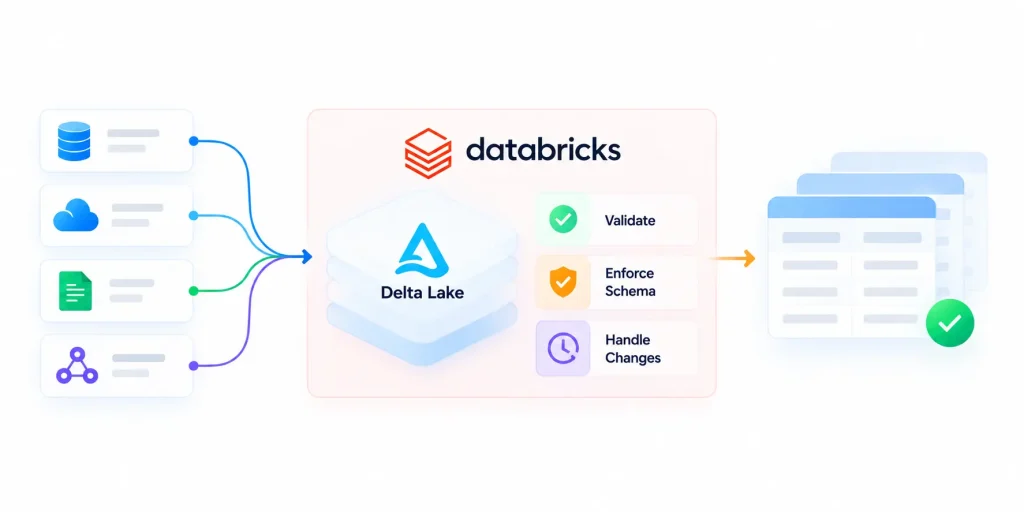
Data quality problems often begin before information enters an analytics platform. Source systems may contain missing values, duplicate records, inconsistent date formats, or changes that downstream workflows do not expect. If a pipeline passes these problems through without validation, they can affect dashboards, business reports, and AI models.
Businesses should define quality rules based on how they use their data. For example, a sales dataset may require a valid transaction date, a recognised product identifier, and a numeric order value. A manufacturing dataset may need consistent equipment identifiers and valid measurement ranges. Applying relevant checks during processing helps teams detect problems earlier and decide whether to reject, correct, or quarantine affected records.
Data quality also requires clear ownership. Teams should understand which department maintains each source, who approves changes to business rules, and how they should report recurring issues. By combining technical validation with clear responsibility, organisations can improve the reliability of their data without relying entirely on manual checks.
How Does Data Integration Affect Pipeline Reliability?
Modern businesses often depend on databases, cloud applications, enterprise systems, and external data sources. Bringing these sources together requires more than connecting them technically. Pipelines must account for differences in data structures, update frequencies, access permissions, and the way each system handles changes.
For example, an enterprise application might introduce a new field or change how it represents a status value. If the downstream pipeline expects the previous structure, processing may fail or produce incomplete results. Teams can reduce these risks by documenting source dependencies, testing schema changes, and introducing appropriate validation before updates reach important datasets.
Organisations exploring Databricks integration services Denmark should consider how their data sources will remain connected as systems evolve. A well-planned integration approach helps maintain consistent information flows, reduces avoidable processing errors, and gives teams a clearer understanding of how data moves across the organisation.
How Can Monitoring Reduce Pipeline Failures?
Even well-designed pipelines can encounter failures. Source systems may become temporarily unavailable, network connections may be interrupted, or unexpected data may prevent a processing job from completing. Without monitoring, teams might discover these issues only after a report becomes outdated or a business user notices missing information.
Monitoring helps data teams identify problems earlier. They can track job status, processing duration, record counts, and other useful indicators to understand whether pipelines are operating normally. Alerts can notify the responsible team when an important job fails, runs unusually slowly, or produces results that differ significantly from expected patterns.
Businesses should also establish clear recovery procedures. Teams need to know whether a failed job can be safely retried, which records require reprocessing, and how to prevent duplicate results. Documented recovery steps reduce confusion during incidents and help organisations restore reliable data flows more quickly.
How Can the Databricks Lakehouse Approach Support Reliable Pipelines?
A Lakehouse architecture combines aspects of data lake flexibility with data warehouse capabilities for managing and analysing data. This approach can help businesses work with different data types while supporting structured analytics and AI workloads within a connected environment. It can also simplify the architecture used to prepare and maintain information for downstream applications.
With Databricks Lakehouse solutions Denmark, organisations can explore ways to manage data engineering and analytics workloads within a more unified platform. For example, teams may ingest raw information, apply quality checks and transformations, and prepare curated datasets for reporting or machine learning. A consistent approach can make it easier to understand how data changes as it moves through different stages.
The architecture alone does not guarantee reliable results. Businesses still need suitable data models, governance policies, monitoring, and testing practices. When these elements work together, a Lakehouse environment can support more maintainable data workflows and help teams respond to changing analytical requirements.
What Should Danish Enterprises Consider Before Improving Their Pipelines?
Before changing existing pipelines, businesses should identify where their current workflows cause the most difficulty. Some organisations may struggle with delayed updates, while others experience frequent failures, inconsistent data, or high maintenance demands. Understanding these problems helps teams focus their effort on improvements that will have a meaningful effect on business operations.
Organisations should also consider data security, access controls, processing costs, and recovery requirements. Not every dataset needs real-time processing, and not every workload requires the same level of availability. Choosing suitable processing schedules and reliability requirements can help businesses avoid unnecessary complexity while ensuring that important information arrives when teams need it.
Finally, businesses should plan for continuous improvement rather than treating pipeline development as a one-time project. Regular reviews can reveal recurring failures, inefficient transformations, and changing source requirements. By monitoring performance and involving the teams that use the data, organisations can keep their pipelines aligned with business needs as their operations evolve.
How Diggibyte Can Help Danish Businesses Improve Data Engineering
Diggibyte helps organisations explore modern data engineering, analytics, and Databricks solutions based on their technical requirements and business objectives. Improving pipeline reliability begins with understanding where data problems occur, which systems depend on the affected information, and how those issues influence reporting or operational decisions. This assessment helps businesses choose practical improvements instead of making unnecessary changes to their entire data environment.
For companies evaluating Databricks data engineering services Denmark, the focus should be on building maintainable workflows that support reliable processing, effective integration, and future analytics needs. Diggibyte can help businesses explore data platform modernisation and engineering approaches that align with their requirements. The right solution should reflect the organisation’s existing systems, data volumes, security needs, and operational priorities.
Businesses can also benefit from a clear plan for monitoring, validation, and ongoing optimisation. These practices help teams understand pipeline performance and address problems before they become recurring operational concerns. By focusing on dependable data flows and useful business outcomes, organisations can create a stronger foundation for analytics and AI.
Conclusion
Reliable data pipelines help businesses turn information from different systems into something they can use with confidence. For Danish enterprises, improving data quality, monitoring processing jobs, managing integration changes, and establishing clear recovery procedures can reduce operational friction and support better decisions.
Databricks provides capabilities for building modern data engineering workflows, but reliability depends on more than the platform itself. Businesses need sound architecture, meaningful validation rules, appropriate governance, and regular monitoring to keep information accurate and available as requirements change.
Looking to improve your data engineering workflows? Connect with Diggibyte to explore Databricks solutions that help Danish businesses build more dependable data pipelines and prepare their data for analytics and AI.
Frequently Asked Questions
How can businesses make data pipelines more reliable?
Businesses can improve pipeline reliability by validating incoming data, monitoring processing jobs, documenting dependencies, and establishing recovery procedures. Regular testing and clear data ownership also help teams identify problems early and maintain dependable information flows.
How does Databricks support data pipelines?
Databricks provides capabilities for ingesting, transforming, and processing data for analytics and AI workloads. Teams can use these capabilities to develop workflows that suit their data sources, processing requirements, and operational needs.
Why is data quality important for data engineering?
Data quality affects the accuracy of reports, analytics, and AI applications. When businesses identify missing, duplicated, or inconsistent records early, they can reduce the risk of unreliable information reaching downstream users.
How does data integration affect pipeline performance?
Data integration connects information from different systems, but differences in formats, update schedules, and schemas can introduce processing challenges. Careful planning, validation, and monitoring help businesses maintain consistent data flows as source systems change.
How can Diggibyte help Danish enterprises with Databricks?
Diggibyte helps businesses explore Databricks and modern data engineering solutions based on their requirements. The focus is on improving data workflows, supporting analytics, and creating a dependable foundation for future AI initiatives.