

Norwegian enterprises can improve data processing with Databricks by connecting data sources, automating processing workflows, improving data quality, and managing large datasets more efficiently. By combining data engineering, analytics, and Lakehouse capabilities, businesses can create reliable data environments that support faster reporting, better decisions, and future AI initiatives.
Businesses generate data throughout their daily operations, from customer transactions and financial records to production systems and supply chain activities. However, collecting information is only part of the challenge. Organisations also need to process it accurately, make it available when required, and ensure that different teams can use it without unnecessary delays.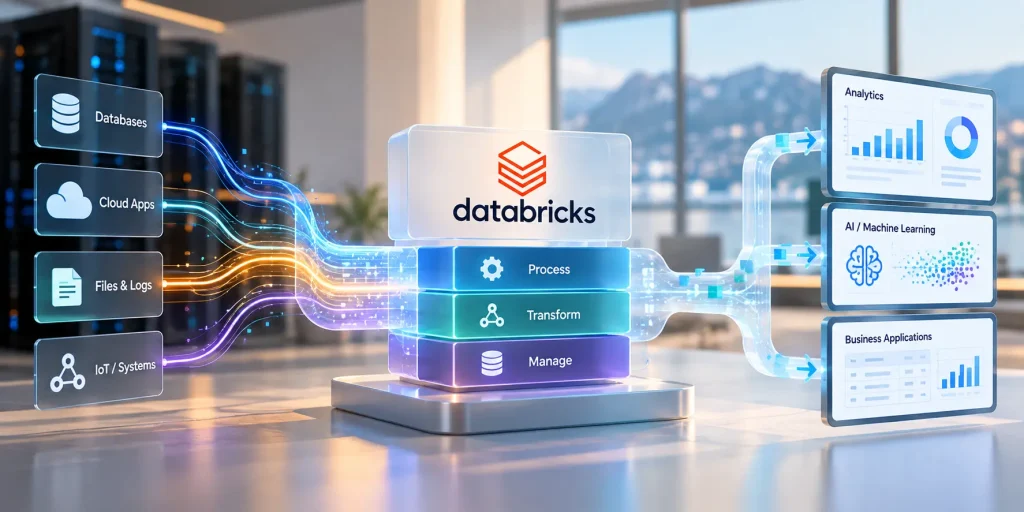
For enterprises in Norway, these requirements can become more demanding as operations expand and data comes from an increasing number of applications and systems. Energy companies may need to analyse operational information, manufacturers may depend on production data, and financial organisations may handle large volumes of transactions. When these systems operate separately, preparing reliable information for analysis can take considerable time and effort.
Traditional data processing workflows can also become difficult to maintain as business requirements change. Teams may need to manage multiple pipelines, investigate inconsistent records, and resolve failures before they can deliver useful insights. These challenges can slow reporting and make it harder for businesses to respond to operational changes.
Databricks offers a way to modernise these workflows by bringing data processing, engineering, and analytics capabilities into a connected environment. With the right architecture and implementation approach, Norwegian enterprises can improve how they manage information and prepare their data for more advanced business applications.
Why Does Data Processing Matter for Norwegian Enterprises?
Data processing turns raw information into something businesses can use. It involves collecting data, checking its quality, applying relevant transformations, and preparing it for reporting or other applications. When these steps work properly, teams can access consistent information instead of spending time correcting records or combining datasets manually.
Consider a Norwegian energy company that collects information from equipment, maintenance systems, operational applications, and external sources. Each system may produce data at a different frequency and in a different format. Without an effective processing workflow, teams may struggle to combine this information and identify patterns that could support operational planning.
Similar challenges affect manufacturing, logistics, retail, and financial services. Businesses need reliable ways to manage growing data volumes while keeping their information accessible and useful. Improving data processing helps reduce unnecessary manual work, strengthens reporting, and creates a better foundation for analytics and AI.
What Data Processing Challenges Can Databricks Help Solve?

Many organisations develop their data environments gradually, adding applications and workflows as their needs change. Over time, these environments can become complicated, particularly when teams use different tools for ingestion, transformation, storage, and reporting. This can make routine data operations harder to monitor and maintain.
Databricks helps businesses build connected data workflows that support different processing requirements within a unified platform. Organisations can use it to process large datasets, organise transformations, and prepare information for downstream analytics. The specific benefits depend on the existing architecture, workload design, and how effectively teams manage the environment.
Disconnected Data Sources
When information comes from different applications, teams may struggle to create a consistent view of business operations. A company might maintain separate datasets for sales, inventory, finance, and customer activity, with each source following different formats and update schedules. Connecting these sources through well-designed processing workflows helps make the information more useful across departments.
Slow Processing Workflows
Some businesses rely on complicated pipelines that require frequent manual intervention or repeat unnecessary processing steps. These workflows can increase maintenance effort and delay the delivery of important information. Reviewing pipeline design, removing inefficient transformations, and selecting suitable processing schedules can help teams improve performance.
Inconsistent Data Quality
Incomplete records, duplicate entries, and unexpected changes in source data can affect reporting accuracy. Businesses should include validation checks in their processing workflows so teams can identify problems before the information reaches dashboards or analytical models. Databricks can support these workflows, but organisations still need clear quality rules and monitoring practices.
How Can Databricks Improve Data Engineering Workflows?
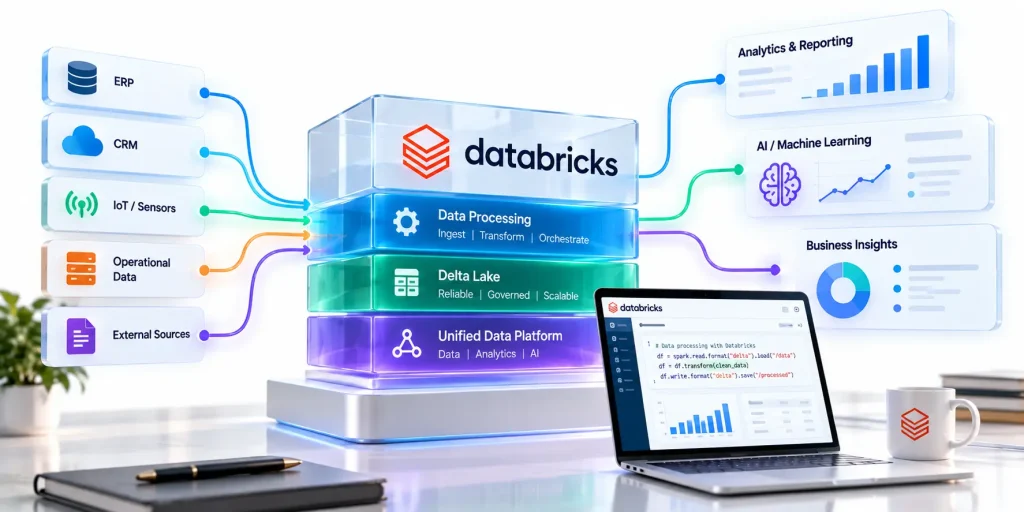
Data engineering provides the structure behind reliable data processing. It helps businesses collect information, transform it into useful formats, and deliver it to the systems and teams that depend on it. A well-designed engineering workflow also makes it easier to monitor failures, manage dependencies, and introduce changes without disrupting existing operations.
Databricks provides capabilities for building and managing data pipelines that process information from different sources. Teams can organise ingestion and transformation tasks, prepare datasets for analytics, and support different workloads within the same platform. This approach can reduce the need to maintain disconnected processing environments for every business requirement.
For Norwegian enterprises exploring Databricks data engineering services Norway, the priority should be to understand where current workflows create the most difficulty. Some businesses may need faster data ingestion, while others may benefit from improved validation or simpler pipeline management. Identifying these needs helps organisations focus on changes that deliver practical value instead of introducing technology without a clear purpose.
How Can Businesses Make Data Processing More Efficient?
Improving processing efficiency starts with understanding how data moves through the organisation. Businesses should identify which datasets are essential, how frequently they need updates, and which processing tasks consume the most resources. This assessment helps teams avoid unnecessary work and select an approach that matches their operational requirements.
Automation can make a significant difference when businesses repeatedly perform the same data preparation tasks. Instead of relying on manual exports and repeated corrections, teams can build scheduled or event-driven workflows that process information according to defined rules. Appropriate monitoring and error handling help ensure that automation remains dependable as source systems change.
Businesses should also review processing costs and performance regularly. Not every workload requires immediate processing, and running every task as frequently as possible can create unnecessary expense. Choosing suitable schedules, improving transformation logic, and monitoring resource usage helps organisations balance speed, reliability, and cost.
How Does the Databricks Lakehouse Approach Support Data Processing?
A Lakehouse architecture combines aspects of data lakes and data warehouses to support data storage, processing, analytics, and AI workloads within a connected environment. This approach can help businesses work with different types of information without managing every workload in a completely separate system. It also provides a foundation for organising data as it moves from raw inputs to curated datasets.
With Databricks Lakehouse solutions Norway, enterprises can explore ways to connect data engineering and analytics workflows more effectively. For example, an organisation might ingest operational records, validate and transform them, and prepare trusted datasets for reporting. Data scientists can then use suitable datasets for further analysis or machine learning, depending on the business requirements.
The Lakehouse approach does not remove the need for good architecture and governance. Businesses still need to define data ownership, manage access permissions, monitor quality, and maintain processing workflows. When these practices support the platform, organisations can create a more manageable environment for data processing and future analytics needs.
How Does Delta Lake Help Maintain Reliable Data?
Data processing becomes more dependable when organisations can manage changes consistently and detect problems before they affect downstream systems. This is particularly important when multiple workflows update the same datasets or when businesses need to maintain reliable information for operational reporting. A processing platform should support appropriate controls for handling updates and unexpected changes.
Delta Lake adds capabilities such as ACID transactions, schema enforcement, and access to historical table versions when the relevant data remains available. These features can help businesses manage data updates consistently, identify incompatible data structures, and investigate certain processing errors. They are useful when organisations need a reliable foundation for analytics and other data-driven applications.
For businesses evaluating Delta Lake solutions Norway, the value depends on how these capabilities fit their existing workloads. Teams should establish appropriate validation rules, monitoring, retention policies, and recovery procedures. Combining these practices with suitable data architecture helps organisations maintain dependable datasets as their processing requirements evolve.
How Can Norwegian Industries Benefit From Better Data Processing?
Energy and Natural Resources
Energy organisations work with operational data, equipment information, maintenance records, and other sources that can support planning and performance analysis. Reliable processing workflows help teams bring this information together and prepare it for analysis. Businesses can then investigate operational patterns and improve their understanding of performance, subject to the quality and availability of their data.
Manufacturing
Manufacturers need information from production systems, inventory applications, suppliers, and logistics operations. Better data processing helps them combine these sources for reporting and operational planning. For example, connecting production and inventory data can help teams identify potential supply issues earlier and make more informed decisions.
Financial Services
Financial organisations depend on accurate transaction data, customer records, and reporting information. Consistent processing helps teams prepare datasets for analytics, risk analysis, and operational reporting. Appropriate access controls and governance remain essential when handling sensitive financial information.
Retail and Logistics
Retail and logistics businesses process sales records, stock updates, delivery information, and customer activity. Reliable data workflows can help them prepare more consistent information for forecasting, inventory planning, and operational analysis. This can improve visibility across the business and help teams respond more effectively to changing demand.
What Should Businesses Consider Before Modernising Data Processing?
Before changing their data environment, businesses should assess their current systems and identify the problems they want to solve. This includes reviewing data sources, processing schedules, workload dependencies, quality requirements, and the systems that rely on the resulting information. A clear assessment helps teams prioritise improvements and avoid unnecessary disruption.
Organisations should also consider security, governance, and operational costs. Different datasets may require different access permissions, retention rules, and processing frequencies. Establishing these requirements early helps businesses create workflows that meet operational needs without adding avoidable complexity or exposing information to inappropriate access.
Finally, businesses should plan for ongoing maintenance. Data sources change, new applications are introduced, and business requirements continue to evolve. Regular monitoring, testing, documentation, and performance reviews help teams keep their processing workflows dependable over time.
How Diggibyte Can Help Norwegian Enterprises Improve Data Processing
Diggibyte helps organisations explore modern data engineering, analytics, and Databricks solutions that align with their business objectives. Improving data processing begins with understanding the existing environment, identifying recurring bottlenecks, and determining which changes will make information more reliable and accessible. This approach helps businesses focus on practical improvements rather than technology adoption for its own sake.
For enterprises considering Databricks, Diggibyte can help evaluate data engineering requirements, processing workflows, integration needs, and opportunities for platform modernisation. The right solution should reflect the organisation’s data volumes, existing systems, security requirements, and future analytics plans. This helps create a more practical foundation for data processing and ongoing improvement.
Businesses should also consider how their processing strategy will support future reporting and AI initiatives. Well-managed pipelines, consistent data quality, and clear governance practices help teams use information with greater confidence. By focusing on business needs and suitable technical solutions, organisations can make their data environment more useful as their operations grow.
Conclusion
Improving data processing helps Norwegian enterprises make better use of the information they already collect. By addressing disconnected systems, inefficient workflows, inconsistent data, and limited monitoring, businesses can reduce operational friction and prepare more reliable datasets for analysis.
Databricks provides capabilities that support modern data engineering and analytics within a connected environment. However, lasting improvements depend on suitable architecture, clear data quality rules, effective governance, and regular performance reviews. Businesses that combine these practices with a well-planned implementation can build a stronger foundation for future analytics and AI.
Ready to improve your enterprise data processing? Connect with Diggibyte to explore Databricks solutions that help Norwegian businesses build reliable data workflows and prepare their data for analytics and AI.
Frequently Asked Questions
How can Databricks improve data processing?
Databricks provides capabilities for ingesting, transforming, and processing data for analytics and AI workloads. Businesses can use these capabilities to build connected workflows, manage large datasets, and prepare consistent information for downstream applications.
Why is data processing important for Norwegian enterprises?
Reliable data processing helps Norwegian enterprises turn information from different systems into useful datasets for reporting and analysis. It can reduce manual work, improve data consistency, and support better operational decisions.
How does a Lakehouse architecture support data processing?
A Lakehouse architecture combines aspects of data lakes and data warehouses to support data storage, engineering, analytics, and AI workloads in a connected environment. Its effectiveness depends on suitable architecture, governance, and workload design.
What role does Delta Lake play in data processing?
Delta Lake supports consistent data updates, schema enforcement, and access to historical table versions when available. These capabilities can help organisations manage data changes and investigate certain processing errors.
How can Diggibyte help businesses improve data processing?
Diggibyte helps businesses explore Databricks and modern data engineering solutions based on their requirements. The focus is on improving workflows, connecting data sources, and building a dependable foundation for analytics and AI.