

Swedish enterprises can improve data engineering with Databricks by building reliable data pipelines, connecting information from different systems, and simplifying data processing. A well-designed data environment helps businesses improve data quality, accelerate analytics, and prepare for advanced AI applications while supporting long-term business growth.
Businesses today collect information from almost every part of their operations. Customer interactions, production systems, financial applications, and digital services all generate data that can help organizations make better decisions. However, collecting this information is only the beginning. Businesses also need reliable ways to organize, process, and deliver it to the people and systems that depend on it.
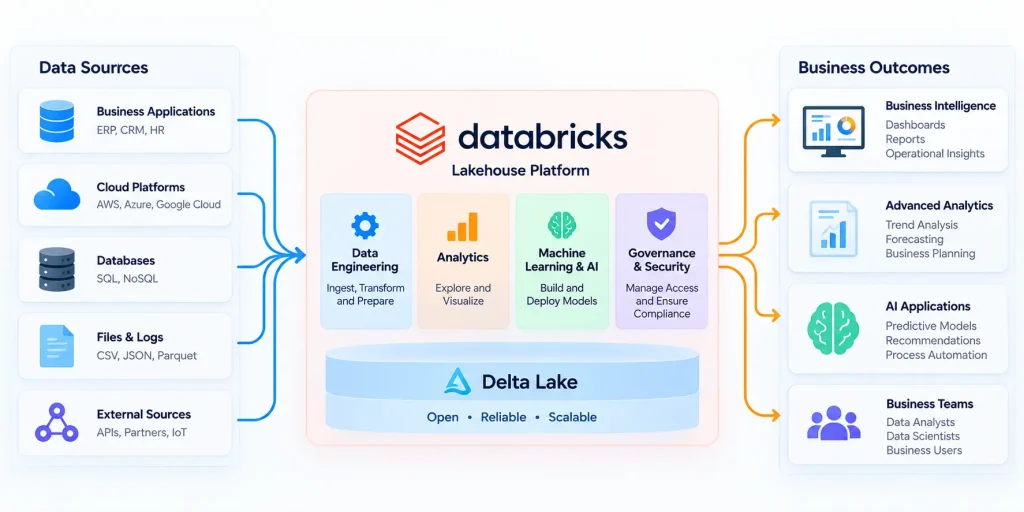
For many enterprises in Sweden, managing data across multiple platforms can create unnecessary complexity. Teams may spend considerable time fixing inconsistent records, maintaining disconnected pipelines, and preparing datasets before they can begin their analysis. These challenges can slow down reporting and make it harder for businesses to respond quickly to changing requirements.
This is where a well-planned data engineering strategy becomes valuable. Databricks provides capabilities that help organizations build data pipelines, process different types of information, and create a connected environment for analytics and AI. Rather than treating data engineering as a background technical task, businesses can use it to improve how information supports everyday operations.
For Swedish enterprises looking to modernize their data environments, the goal should be simple: make reliable data easier to access, maintain, and use. Achieving this requires the right architecture, clear business priorities, and an approach that supports both current workloads and future innovation.
Why Is Data Engineering Important for Swedish Businesses?
Data engineering creates the foundation for reliable analytics and informed decision-making. It involves collecting information from different sources, processing it, checking its quality, and making it available for business applications. When these processes work well, teams can spend less time preparing data and more time using it to solve business problems.
Consider a Swedish manufacturer that manages production information, supplier records, inventory, and delivery schedules across separate systems. If these systems do not share information effectively, teams may struggle to understand production delays or identify supply chain issues. A reliable data engineering process can bring these sources together and make the information more useful for planning.
The same principle applies to financial services, retail, healthcare, and technology companies. Each industry generates different types of data, but all need dependable processes to turn that information into something useful. Better data engineering can improve operational visibility, support accurate reporting, and help businesses build a stronger foundation for digital transformation.
How Can Databricks Improve Data Engineering Workflows?
Databricks brings data processing, engineering, analytics, and AI capabilities together in a unified environment. This helps organizations develop workflows that move information from source systems into datasets that analysts, applications, and AI systems can use. Teams can work within a connected platform instead of managing every stage through separate, disconnected environments.
For example, a business may need to collect information from customer relationship management software, enterprise resource planning systems, and cloud applications. Data engineers can design workflows to ingest that information, apply the necessary transformations, and prepare consistent datasets for reporting or further analysis. This creates a more organized process for managing data across the business.
The platform can also support different data workloads as requirements change. Organizations can develop pipelines for routine reporting, prepare large datasets for analytics, and build data foundations for machine learning applications. With appropriate architecture and governance, businesses can expand these workflows without unnecessarily complicating their data environment.
How Can Businesses Build More Reliable Data Pipelines?
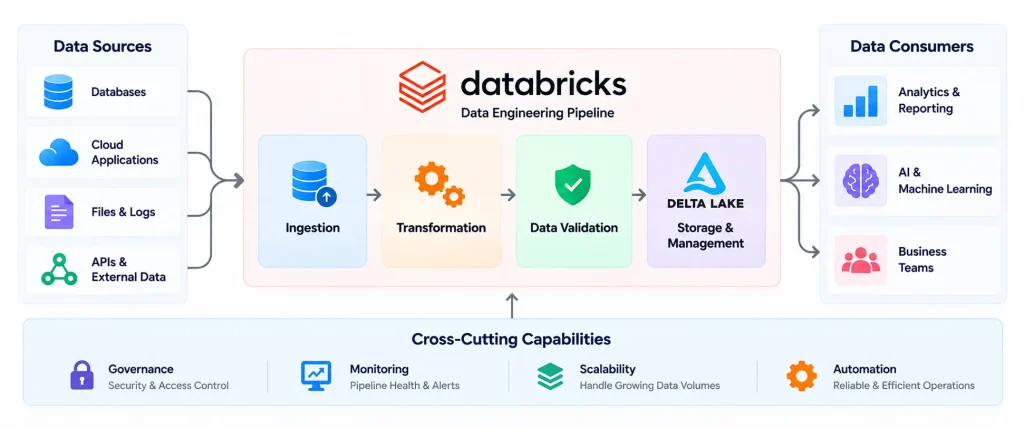
Reliable pipelines help information move consistently from source systems to its intended destination. Businesses need to consider how pipelines handle missing records, changing data formats, processing failures, and unexpected increases in data volume. Addressing these issues during development can reduce interruptions and improve confidence in the information used for business decisions.
Databricks data pipelines can support these workflows by helping engineering teams organize data ingestion, transformation, and processing tasks. However, reliability also depends on sound engineering practices. Teams should monitor pipeline performance, validate important datasets, document dependencies, and establish clear procedures for handling errors.
For Swedish enterprises, the practical benefit is greater confidence in everyday data operations. When pipelines run consistently and teams can identify problems quickly, reporting becomes easier to maintain and downstream applications receive more dependable information. These improvements also give data engineers more time to work on performance, new data sources, and evolving business requirements.
What Data Engineering Challenges Can Databricks Help Solve?
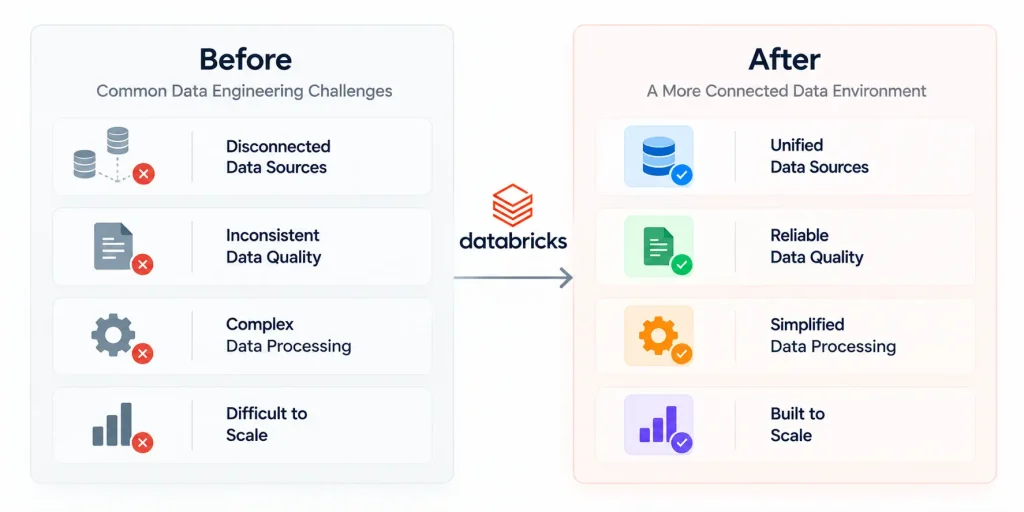
Many data challenges arise because organizations have developed their systems over several years. Different departments may use different tools, data formats, and reporting processes, leaving teams with inconsistent information and duplicated work. As businesses expand their analytics and AI initiatives, these issues can become more difficult to manage.
Databricks can help organizations address several of these challenges through a more connected approach to data processing and analytics.
Disconnected Data Sources
When business information sits in separate applications, teams may struggle to create a complete picture of operations. Data engineering workflows can connect relevant sources and prepare consistent datasets for analysis. This helps organizations reduce manual data preparation and makes it easier for different teams to work with shared information.
Poor Data Quality
Incomplete, duplicated, or inconsistent records can undermine reporting and AI applications. Businesses should build quality checks into their data workflows to identify issues before information reaches downstream users. Clear validation rules and ongoing monitoring help teams maintain more dependable datasets.
Complex Data Processing
Large datasets and multiple transformation steps can make engineering workflows difficult to maintain. A structured approach helps teams organize processing tasks, monitor performance, and identify inefficient operations. Databricks provides capabilities for processing data at scale, while thoughtful design helps businesses use those capabilities effectively.
Growing Analytics Requirements
As more teams begin using data, existing pipelines may need to support additional reports, applications, and analytical workloads. Businesses benefit from architectures that can accommodate new requirements without requiring a complete redesign every time their needs change. Planning for scalability early helps make future expansion more manageable.
How Does Data Integration Strengthen Data Engineering?
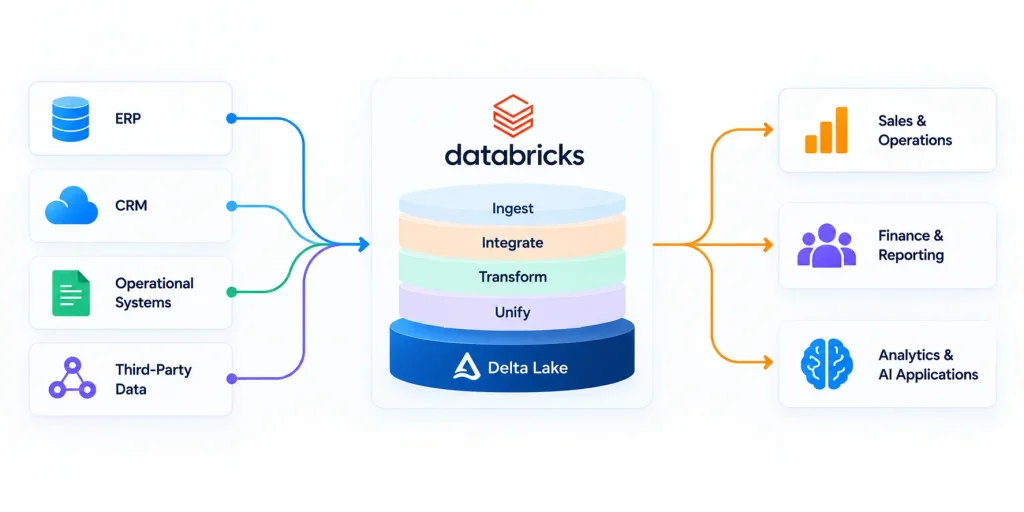
Data engineering becomes more useful when information from different business systems can work together. Data integration connects those sources and helps organizations create a more complete view of their operations. Without it, teams may rely on manual exports, repeated data entry, or separate reports that provide only part of the picture.
Databricks data integration can support workflows that bring together information from databases, cloud applications, enterprise systems, and other relevant sources. Engineers can then transform and organize that information according to business requirements. The exact approach depends on the source systems, security needs, data volume, and how frequently the information must be updated.
For example, a retailer could combine sales, inventory, and supplier data to improve stock planning. A manufacturing business might connect production records with maintenance information to better understand equipment performance. These outcomes depend on the quality of the underlying data and the way teams design their workflows, not simply on connecting more systems.
How Can Databricks Support AI and Advanced Analytics?
Businesses increasingly want to use AI to forecast demand, identify patterns, automate routine work, and improve customer experiences. However, AI initiatives often encounter difficulties when the underlying data is incomplete, inconsistent, or difficult to access. Data engineering helps address these issues by preparing information before it reaches analytical models and AI applications.
Databricks can support this process by providing a shared environment for data preparation, analytics, and machine learning workflows. Engineering teams can prepare relevant datasets, analysts can explore business patterns, and data scientists can use suitable information to develop and evaluate models. This connected approach can reduce friction between teams that otherwise work across separate systems.
Swedish enterprises should still begin with a clear business problem rather than adopting AI simply because the technology is available. A company might start by improving demand forecasting or reducing manual reporting before moving towards more advanced applications. Building reliable data workflows around these priorities creates a more practical path towards AI adoption.
What Should Swedish Enterprises Consider Before Modernizing Data Engineering?
Before changing their data environment, businesses should understand their existing architecture and identify the problems they want to solve. This includes reviewing source systems, pipeline dependencies, data quality, security requirements, and the workloads that support essential operations. A clear assessment helps teams choose an approach that fits their needs rather than introducing unnecessary complexity.
Organizations should also consider governance and access controls from the beginning. Different teams may need different levels of access to customer information, financial records, or operational data. Establishing suitable permissions, monitoring, documentation, and data ownership helps businesses manage information responsibly as their environment grows.
Finally, enterprises should plan for ongoing maintenance and optimization. Data engineering is not a one-time implementation project because source systems, business requirements, and data volumes continue to change. Regular reviews of pipeline performance, data quality, operating costs, and user requirements help businesses keep their platform useful over time.
How Can Diggibyte Help Swedish Enterprises Improve Data Engineering?
Diggibyte helps businesses explore modern data platforms, analytics, and AI solutions that support their wider technology goals. For organizations evaluating Databricks, the right approach begins with understanding their existing data challenges, identifying the outcomes they want to achieve, and planning a suitable technical solution.
Businesses exploring Databricks data engineering services Sweden should consider how the proposed solution will improve their data workflows, connect important systems, and support future analytics requirements. Diggibyte can help organizations assess these needs and explore data engineering approaches aligned with their business objectives.
The focus should remain on practical outcomes rather than technology for its own sake. Better-organized pipelines, more dependable datasets, and a clearer path towards analytics can help businesses make stronger use of their information. These improvements can also prepare the organization for future AI initiatives without losing sight of its current operational needs.
Conclusion
Improving data engineering is about making information more reliable and useful across the business. Swedish enterprises that invest in well-designed pipelines, effective integration, and consistent data quality can reduce operational friction and give their teams better access to the information they need.
Databricks offers capabilities that support these goals by bringing data processing, analytics, and AI workflows into a connected environment. However, the strongest results come from matching the technology to genuine business needs and maintaining the data environment as those needs evolve.
Ready to improve your data engineering strategy? Connect with Diggibyte to explore Databricks solutions that help Swedish enterprises build reliable data workflows and create a stronger foundation for analytics and AI.
Frequently Asked Questions
What is data engineering, and why does it matter?
Data engineering involves collecting, processing, validating, and preparing information so that businesses can use it for reporting, analytics, and AI. Reliable data engineering helps organizations reduce manual work, improve data quality, and make information more accessible to teams.
How does Databricks support data engineering?
Databricks provides capabilities for building data pipelines, processing datasets, and preparing information for analytics and AI workloads. Teams can use these capabilities to develop connected workflows that support business requirements and evolving data needs.
How can businesses improve data pipeline reliability?
Businesses can improve pipeline reliability by validating data, monitoring processing jobs, documenting dependencies, and establishing procedures for handling errors. Regular performance reviews also help engineering teams identify problems and keep workflows maintainable.
Can Databricks integrate data from different business systems?
Databricks can support data workflows that bring information from multiple sources into a unified environment. The integration approach depends on the source systems, data formats, security requirements, and the frequency with which information needs to be updated.
How can Diggibyte support data engineering in Sweden?
Diggibyte helps businesses explore Databricks and modern data solutions based on their technical requirements and business goals. The focus is on creating reliable data workflows that support analytics, improve data accessibility, and prepare organizations for future AI initiatives.