
Automated Schema Drift Detection in Databricks A Scalable and Configurable Approach

In modern data engineering, complex pipelines constantly process vast amounts of information from diverse sources. But one silent disruptor can destabilize everything—schema drift. When source systems unexpectedly add, rename, or change fields, these unnoticed shifts can break pipelines, corrupt models, and produce inaccurate reports. This blog post simplifies schema drift and shows how to detect […]
Databricks Pipeline Showdown: Delta Live Tables vs Jobs & Workflows
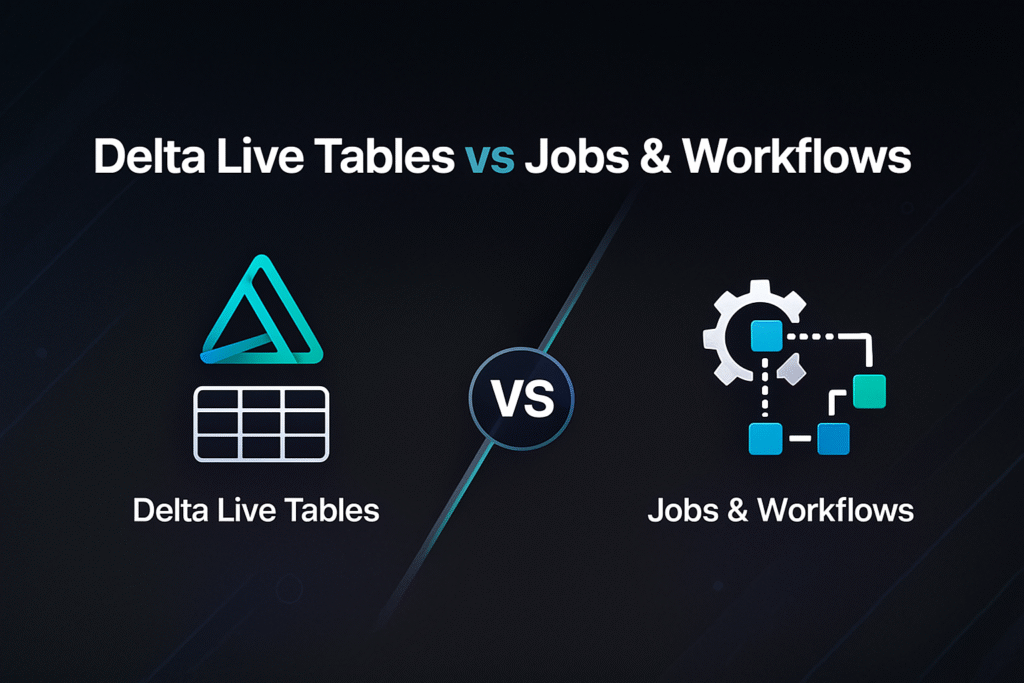
Organizations need data pipelines that are not only scalable and reliable but also simple to manage and evolve as business needs grow. Within the Databricks ecosystem, there are two main ways to achieve this: Delta Live Tables (DLT) and Jobs & Workflows. Delta Live Tables offers a fully managed, declarative framework that simplifies the creation […]
Breaking Data Silos with Federated Data Sharing: The Future of Connected Analytics

In today’s fast-moving world, every sector—from finance and manufacturing to pharma—depends on data for decision-making and innovation. Yet much of that data remains locked in separate systems, clouds, or partner environments. This fragmentation doesn’t just complicate IT—it slows down insights, innovation, and regulatory compliance. With the Databricks Lakehouse Platform—and its features like Lakehouse Federation and […]
Databricks to Azure SQL DB: Secure Authentication with Service Principals

In enterprise data platforms, Spark is the backbone for large-scale data processing, whether in Azure Databricks, Synapse, or standalone clusters. A common requirement is to establish a connection between Spark and Azure SQL Database for reading data, persisting results, or enabling downstream reporting. Traditionally, this connection relies on username and password authentication. while this method introduces security challenges. A more secure […]
A Deep Dive into Metric Views for Beginners in Databricks Unity Catalog
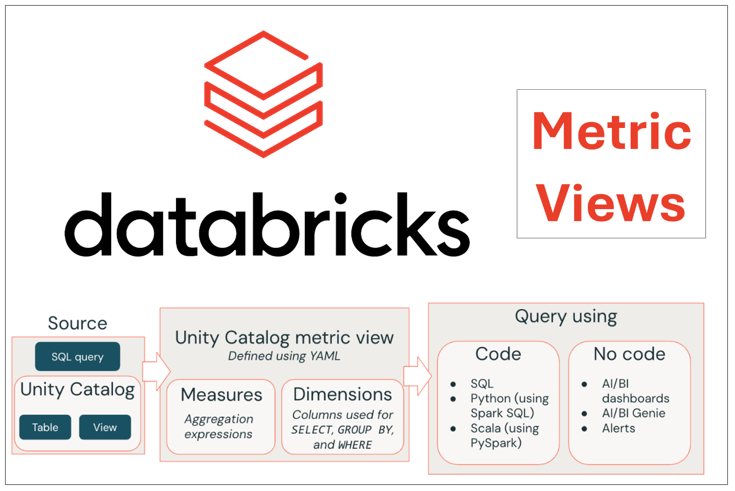
Metric Views in Databricks Unity Catalog are a powerful way to create consistent, reusable business metrics, making it easy for teams to analyze key performance indicators (KPIs). They’re like a shared recipe book for your data—define your metrics once, and everyone can use them in queries, dashboards, or reports without writing complex code. In this […]
Verify, Trust, Comply: The Future of Responsible AI on Databricks

Regulators expect timely, accurate disclosures; investors demand transparent ESG performance; customers reward brands that do the right thing and prove it. Yet inside most enterprises, compliance is chaotic, with internal data scattered across finance, supply chain, HR, and operations. Databricks helps break down these silos, unifying enterprise data on a single platform so organizations can […]
Talk Data to Me: Conversational AI Meets the Data Intelligence with Databricks

In today’s data-driven world, businesses sit on mountains of data, but turning raw data into actionable insights remains a major challenge. Multiple siloed systems, fragmented datasets, and the sheer complexity of analysis often leave organizations paralyzed, unable to extract meaningful insights promptly. Decision-making slows, opportunities are missed, and teams are bogged down in manual data […]
Seamless Ingestion from Google Sheets to Databricks: A Step-by-Step Guide
In today’s data-driven world, enterprises handle massive amounts of continuously arriving data from various sources. Google Sheets often serves as a quick and easy way for teams to manage and share data, especially for smaller datasets or collaborative efforts. However, when it comes to advanced analytics, larger datasets, or integration with other complex data sources, […]
Deep Copy vs Shallow Copy in Databricks Delta Lake
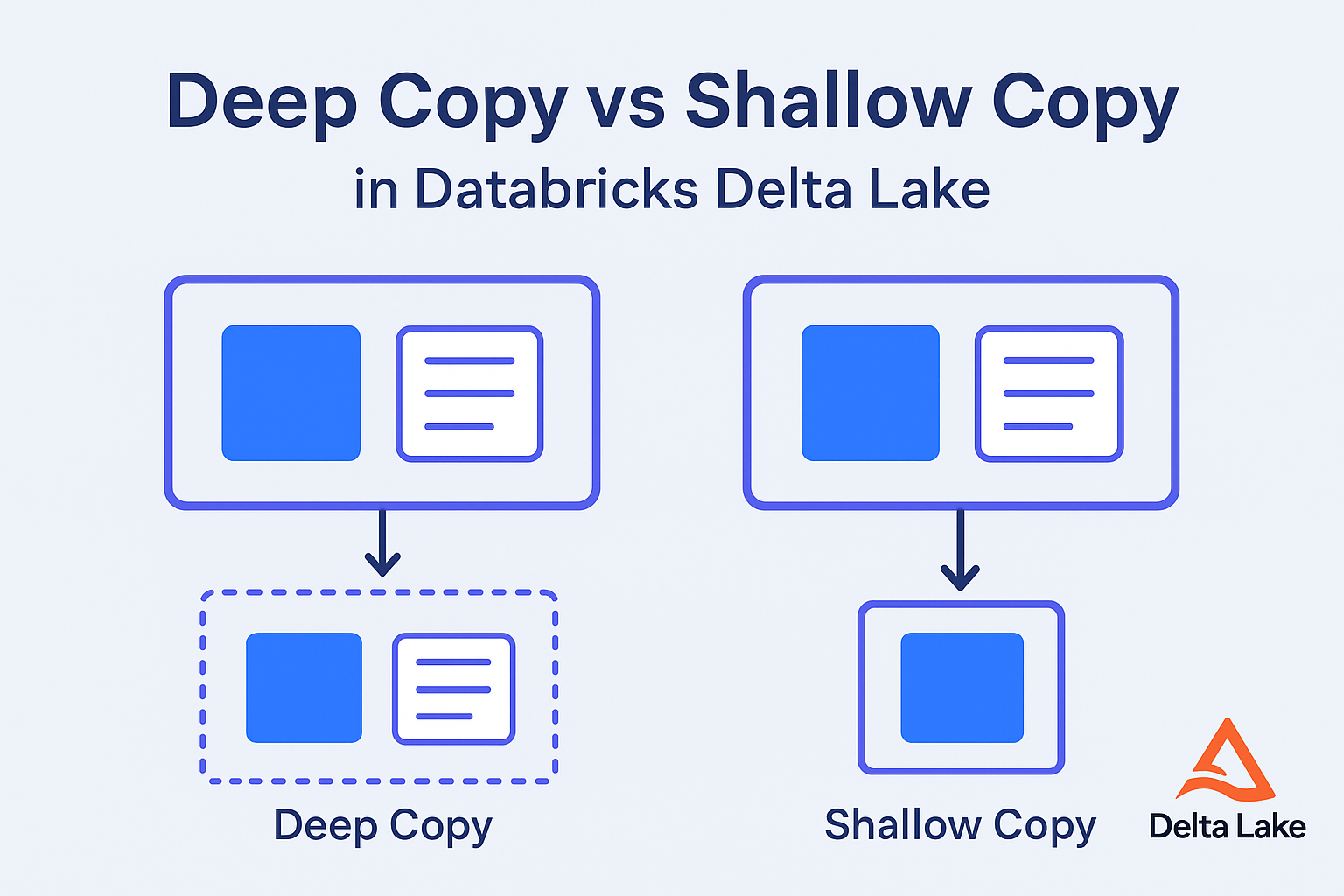
When working with large-scale data in Databricks Delta Lake, it’s common to create copies of tables for testing, development, or archival purposes. However, not all copies are created equal. In Delta Lake, shallow copy and deep copy serve different purposes and have very different behaviors — both in terms of performance and data isolation. In […]
The Hidden Wall Between Fabric OneLake and Databricks Unity Catalog
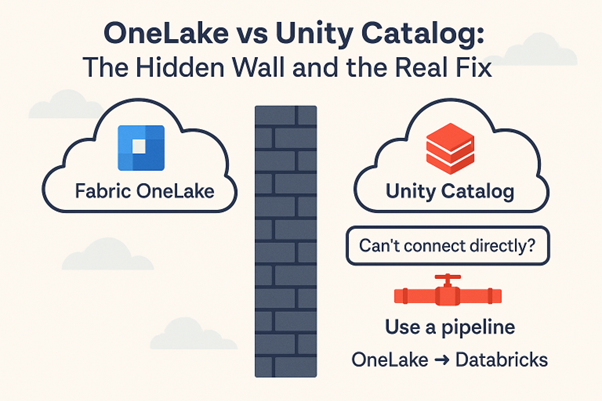
These days, many teams use Microsoft Fabric OneLake for unified storage and Databricks Unity Catalog (UC) for data governance and analytics. But here’s the catch: when you try to connect them directly, you hit a wall. You can’t simply register a Fabric Lakehouse as an external location in Databricks Unity Catalog like you would with […]