
Why Your Business Should Consider Databricks in 2026?

In 2026, businesses are mainly facing an unprecedented amount of data. The capability to harness the power of this data, turn it into actionable insights, and incorporate it smoothly into business operations has become more vital than ever before. In this case, one platform that has stood out in this regard is Databricks. When you […]
How to Choose the Right Databricks Partner? A 10-Point Checklist

Databricks is transforming the modern data landscape by enabling enterprises to handle vast data volumes, deliver real-time insights, and support advanced machine learning models in a data-driven world. Databricks, featuring its integrated data analytics environment, has become the preferred choice for enterprises aiming to refine their large-scale data operations. However, fully capitalizing on Databricks involves […]
Top 5 High-Impact Databricks Use Cases You Should Know

In data-driven enterprise environment, organizations are no longer asking whether they should modernize their data platforms, they are asking how fast they can do it. As data volumes grow and analytics evolve from descriptive to predictive, traditional data architectures struggle.This is where Databricks has emerged as a powerful unified data and AI platform, enabling enterprises […]
FinQ for Finance Leaders: Turning Numbers into Narratives with Databricks

Finance isn’t just about reporting numbers anymore—it’s about shaping strategy, guiding capital allocation, and building resilience in a volatile world. CFOs and their teams sit at the centre of growth, profitability, and liquidity decisions, yet too often they are constrained by fragmented systems, static dashboards, and manual spreadsheets. In fast-moving markets, these limitations can be […]
People Decisions, Powered by Data: HRIQ + Databricks in Action
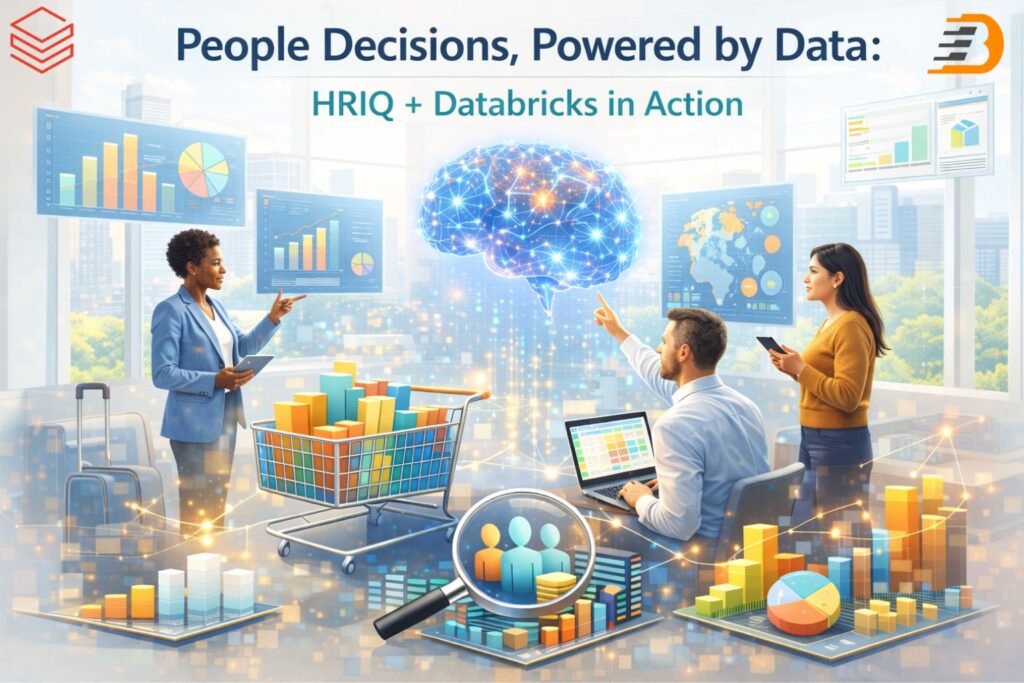
Hiring the right talent has always been one of the most critical priorities for organizations. Employees drive innovation, customer experiences, and long-term business performance. Yet despite its importance, the process of attracting, selecting, and onboarding employees has historically been riddled with inefficiencies. HR teams spend endless hours screening resumes, coordinating interviews, and onboarding new hires—only […]
Crystal Ball for Retail Business: DemandIQ + Databricks Redefining Forecasting
Retail has always been a business of margins, speed, and precision. Stock too little, and you lose customers to competitors. Stock too much, and you tie up working capital in slow-moving inventory while increasing markdown risks. Add in promotions, seasonality, supply disruptions, and rapidly shifting consumer behavior—and forecasting becomes less of a science and more […]
Handling CDC in Databricks: Custom MERGE vs. DLT APPLY CHANGES
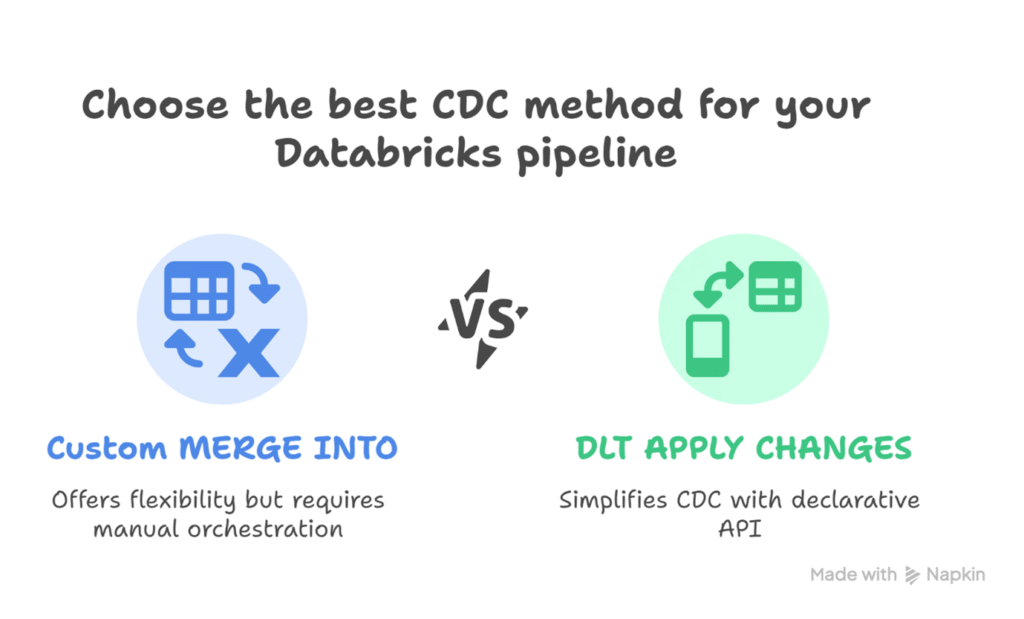
Change data capture (CDC) is crucial for keeping data lakes synchronized with source systems. Databricks supports CDC through two main approaches: Custom MERGE operation (Spark SQL or PySpark) Delta Live Tables (DLT) APPLY CHANGES, a declarative CDC API This blog explores both methods, their trade-offs, and demonstrates best practices for production-grade pipelines in Databricks. Custom […]
Understanding RELATED and RELATEDTABLE Functions in Power BI

Data modeling is a foundational skill in Power BI, and mastering DAX functions that operate across related tables is essential for creating powerful and efficient reports. Two of the most useful functions for working with relationships in Power BI are RELATED and RELATEDTABLE. In this blog, we will explore what these functions do, when to […]
Event Stream vs Apache Kafka: Choosing the Right Engine for Real-Time Data

Introduction In today’s digital world, data is moving at the speed of thought. Imagine a fleet of 100 vehicles, each equipped with 200 sensors, continuously generating millions of events per second. This isn’t fiction — it’s happening in industries like logistics, automotive, and smart cities. If you delay this data by even 30 seconds, the […]
Liquid Clustering in Databricks: The Future of Delta Table Optimization
Introduction — The Big Shift in Delta Optimization In the ever-evolving world of big data, performance tuning is no longer optional – it’s essential. As datasets grow exponentially, so does the complexity of keeping them optimized for querying. Databricks’ Liquid Clustering is a groundbreaking approach to data organization within Delta tables. Unlike traditional static partitioning, […]