Workdays are full of repetitive digital tasks, emails, scheduling meetings, updating CRMs, and managing online systems. Most AI assistants can tell you what to do, but can they actually do it?
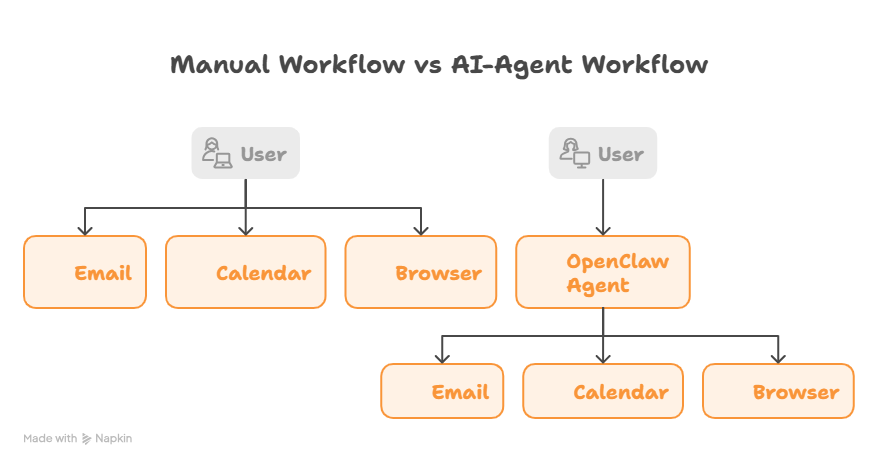
OpenClaw is designed to take action on your behalf, transforming AI from a helper into a digital operator.
What Makes OpenClaw Unique?
Traditional AI agents often stop at advice or suggestions. OpenClaw goes further:
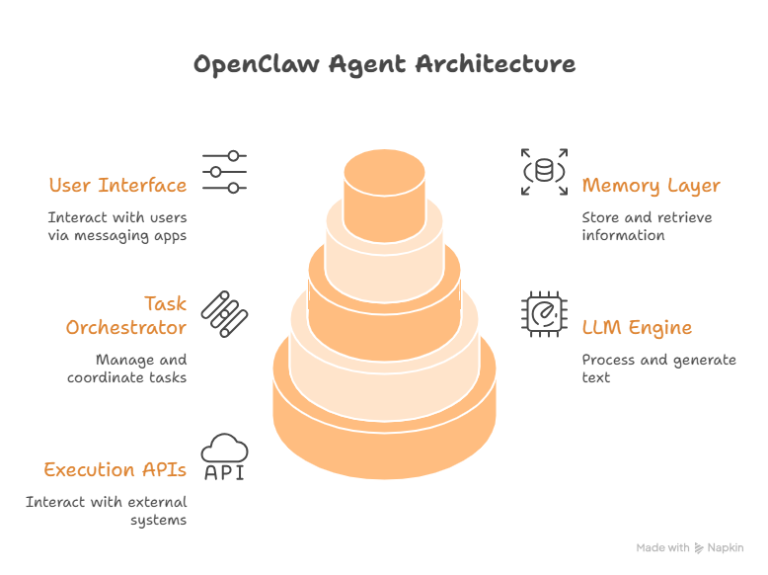
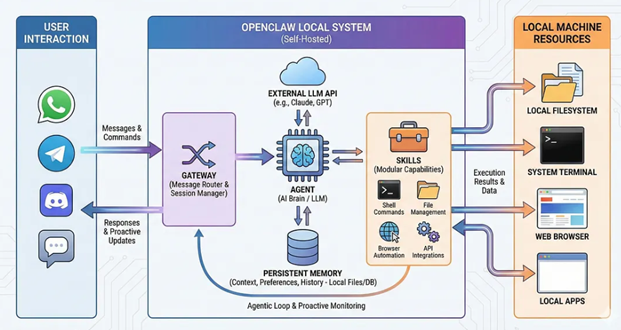
- Conversational Task Execution: Users communicate via familiar chat platforms.
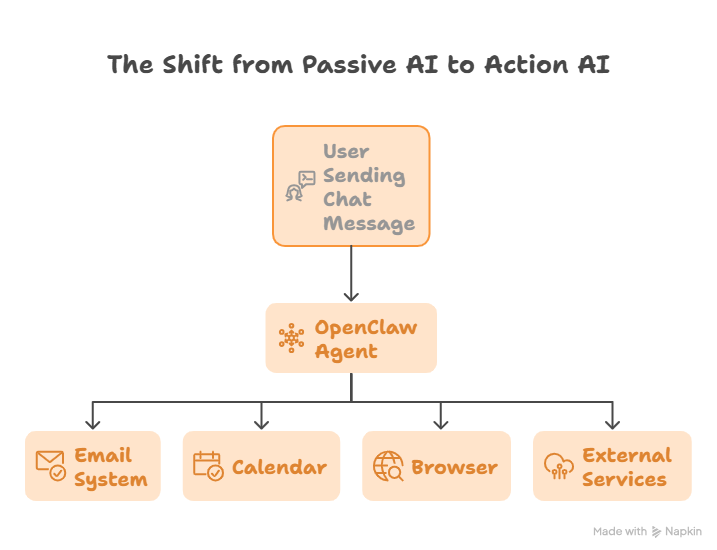
- Multi-step Workflows: Automates sequences like “send email → schedule meeting → update CRM”.
- Context Awareness: Remembers prior interactions to reduce repetitive instructions.
- Secure Integration: Scoped API access ensures safety for sensitive operations.
Concept | Explanations |
Conversational Interface | Trigger tasks using natural language in chat apps |
Task Orchestration | Executes multi-step workflows automatically |
Context Memory | Remembers prior tasks and states for continuity |
Execution Layer | Integrates with email, calendar, and web automation APIs |
Unlike other AI agents, OpenClaw’s focus is on action-first design, making automation seamless and reliable.
Why This Topic Matters?
Who Should Read This?
- Enterprise IT teams
- Operations managers
- Startups handling repetitive workflows
- Anyone exploring AI-driven automation
Industry Relevance
- Financial Services: Automating transaction alerts, emails, and customer updates
- Travel & Hospitality: Automatic check-ins, boarding pass delivery, scheduling
- SaaS & E-commerce: Updating CRMs, inventory, or order statuses
Current Challenges Without OpenClaw
- Manual multi-step tasks eat time
- Context switching reduces productivity
- Many AI agents only advise, requiring human follow-up
OpenClaw changes the paradigm: chat becomes the interface, and AI becomes the operator.
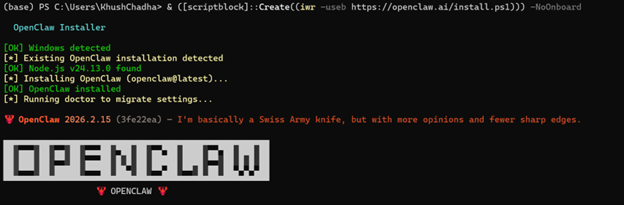
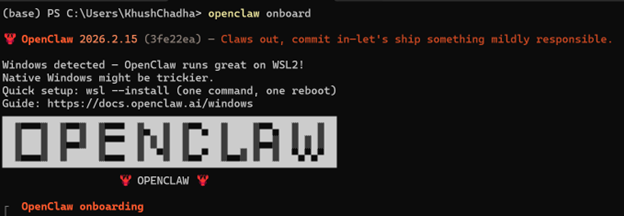
Practical Implementation:
& ([scriptblock]::Create((iwr -useb https://openclaw.ai/install.ps1))) -NoOnboard
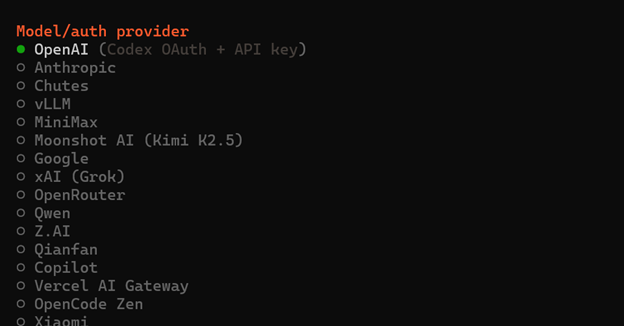
Choose the LLM Model for OpenClaw
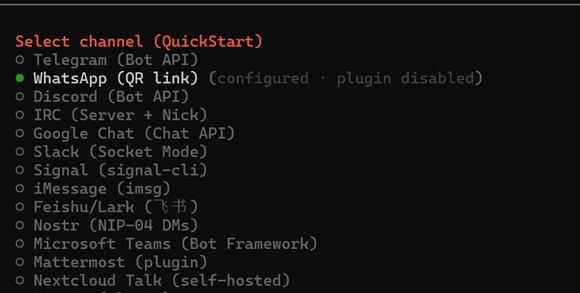
Connect Chat Platform
Integrate OpenClaw with messaging platforms such as:
- WhatsApp Business API
- Telegram Bot API
Enable Secure Permissions
- Role-based access control
- API key management
- Encrypted communication
This allows the safe execution of user-authorized
Performance & Best Practices
- Use scoped API permissions to limit risk
- Enable logging for each action
- Retry failed actions to ensure reliability
- Monitor execution latency to optimize speed
Do’s | Don’ts |
Use role-based permissions | Grant full system access |
Log every action | Ignore audit trails |
Implement retries | Assume tasks always succeed |
Monitor performance metrics | Ignore errors |
Industry Use Case / Real-World Application
Travel Automation Scenario
Before:
Employees manually check flight status, complete check-ins, and download boarding passes.
After implementing OpenClaw:
A single chat instruction triggers:
- Flight lookup
- Automatic check-in
- Boarding pass retrieval
- Calendar update
Operational friction is reduced significantly.
Enterprise Workflow Example
Customer support teams can automate:
- Ticket updates
- Email responses
- CRM synchronization
This reduces turnaround time and improves service quality.
Future Trends & Roadmap
Agent-based systems are evolving rapidly.
Emerging advancements include:
- Multi-agent coordination
- Persistent contextual memory
- Self-healing workflows
- Enterprise-grade compliance integration
As organizations adopt agent frameworks, conversational automation may become the default interaction model for enterprise software.
OpenClaw signals a broader shift toward autonomous digital task management.