
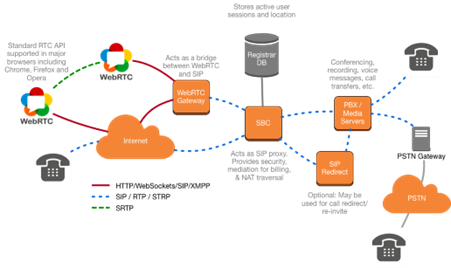
In today’s hyperconnected world, seamless real-time communication has become a fundamental part of our daily digital experiences. Whether we are participating in a video conference, playing an online multiplayer game, chatting with customer support, or collaborating remotely, the ability to exchange data instantly is essential.
At the core of this real-time revolution lies WebRTC (Web Real-Time Communication) — an open technology that enables direct communication between browsers and devices without requiring plugins or third-party software.
This article explores what WebRTC is, how it works, why it’s secure, and how it’s transforming modern web applications.
What Is WebRTC?
WebRTC (Web Real-Time Communication) is an open-source project developed by Google and supported by major browser vendors such as Mozilla, Microsoft, and Apple. It enables real-time audio, video, and data sharing directly between browsers or mobile applications using simple JavaScript APIs.
Unlike traditional communication systems that depend on external servers for media transfer, WebRTC establishes peer-to-peer (P2P) connections between users. This reduces latency, improves performance, and eliminates the need for plugins or additional installations.
In simple terms, WebRTC allows you to start a video call, voice chat, or file-sharing session directly from your web browser — securely and instantly.
How WebRTC Works
WebRTC combines several core technologies to make direct communication between devices possible. Below is a simplified overview of its workflow.
Signalling
Before two peers can communicate, they must exchange information about how to connect — such as network addresses, session descriptions, and media capabilities.
This process is called signalling.
WebRTC itself does not define a signalling protocol; developers typically use WebSocket, HTTP, or similar technologies to exchange this data through a signalling server.
STUN and TURN Servers
Most users are behind firewalls or routers that use Network Address Translation (NAT). This makes it difficult for peers to discover each other’s real IP addresses.
To overcome this, WebRTC uses two types of servers:
- STUN (Session Traversal Utilities for NAT) servers help discover the public IP address and port mapping of a peer.
- TURN (Traversal Using Relays around NAT) servers act as relays when a direct peer-to-peer connection cannot be established.
Together, these components ensure reliable connectivity under various network conditions.
Peer-to-Peer Connection
Once the signalling process is complete, WebRTC establishes a secure peer-to-peer connection. All subsequent media and data traffic flows directly between the peers, minimising latency and bandwidth usage.
Media and Data Channels
WebRTC provides high-level JavaScript APIs that make real-time communication accessible to developers:
- getUserMedia() – Captures audio and video streams from the user’s camera and microphone.
- RTCPeerConnection – Handles the network connection between peers and manages media transmission.
- RTCDataChannel – Allows peers to exchange arbitrary data (such as text messages or files) directly.
These APIs are supported across major browsers and operating systems, making WebRTC a truly cross-platform technology.
Security and Privacy
Security is an integral part of WebRTC’s architecture. Every connection established through WebRTC is
Encrypted by default.
- DTLS (Datagram Transport Layer Security) secures data transport.
- SRTP (Secure Real-Time Protocol) encrypts audio and video streams.
This ensures that only the intended peers can access the transmitted content. Additionally, browsers require explicit user consent before accessing a camera or microphone, reinforcing privacy and user trust.
Key Features of WebRTC
WebRTC offers a range of features that make it one of the most powerful and flexible real-time communication technologies available:
- High-Quality Audio and Video: Supports modern codecs such as Opus (for audio) and VP8, VP9, and AV1 (for video), ensuring adaptive quality and efficient bandwidth usage.
- Low Latency: Direct peer-to-peer transmission reduces communication delays, essential for live video, gaming, and interactive experiences.
- Cross-Platform Compatibility: Works on all major browsers (Chrome, Firefox, Safari, Edge) and supports mobile platforms via native APIs.
- Data Channels: Enables peer-to-peer file transfer, gaming data synchronisation, or custom signalling without relying on centralised servers.
- Scalability Options: While inherently peer-to-peer, WebRTC can be integrated with media servers such as Janus, Kurento, or Jitsi for group calls or large-scale conferencing.
Real-World Applications of WebRTC
WebRTC is widely used across industries, often powering popular applications behind the scenes.
Video Conferencing
Platforms such as Google Meet, Zoom, and Microsoft Teams rely on WebRTC components to deliver high-quality, low-latency video communication.
Customer Support Chat
Businesses embed real-time video and audio chat on their websites to offer instant customer assistance without requiring software downloads.
Telehealth and Remote Consultations
Medical professionals use WebRTC-based platforms for secure, encrypted video consultations with patients — a vital feature in modern telemedicine.
Online Education
Virtual classrooms and e-learning platforms use WebRTC to support interactive lessons, live discussions, and screen sharing.
Gaming and IoT
Real-time data channels enable fast, synchronised communication between players or connected devices in the Internet of Things (IoT) ecosystem.
Example: A Simple WebRTC Implementation
Here is a basic JavaScript example that captures webcam video and plays it in the browser using the getUserMedia() API:
					const video = document.querySelector('video');
navigator.mediaDevices.getUserMedia({ video: true, audio: true })
  .then(stream => {
    video.srcObject = stream;
  })
  .catch(error => {
    console.error('Error accessing media devices:', error);
  });
This short snippet requests permission to access your camera and microphone. Once granted, it displays the live video stream directly on the page — demonstrating WebRTC’s core functionality in just a few lines of code.
The Future of WebRTC
WebRTC continues to evolve rapidly, with ongoing development by the W3C and IETF communities. New trends and improvements are shaping its next generation, including:
- Integration with AI and Machine Learning for real-time transcription, background noise suppression, and facial recognition.
- Edge Computing enhancements that bring media processing closer to users, reducing latency and server load.
- Scalable Multi-Party Communication using SFUs (Selective Forwarding Units) and cloud-based media routing.
- Improved Mobile Support and optimized performance on constrained devices.
These advancements ensure that WebRTC remains the foundation for modern, interactive, and intelligent web communication systems.
Final Thoughts
WebRTC has redefined how we communicate online.
By enabling secure, high-quality, real-time communication directly through the browser, it empowers developers to build immersive and responsive digital experiences without friction.
Whether you are creating a telehealth platform, an online classroom, or the next innovative collaboration tool, WebRTC offers the foundation for reliable and scalable real-time interaction.
Its open standards, robust security, and broad browser support make it one of the most impactful technologies shaping the future of web communication.