
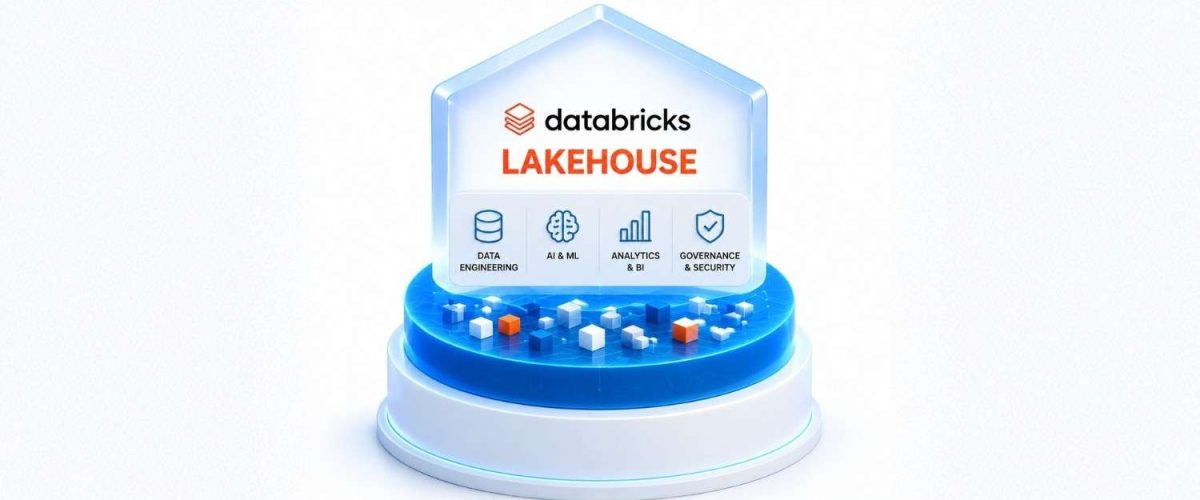
Databricks Lakehouse reduces data complexity by unifying data storage, analytics, governance, and AI workloads within a single platform. It helps organizations eliminate data silos, simplify architecture, improve accessibility, strengthen governance, and create a scalable foundation for analytics and artificial intelligence initiatives.
Managing data has become increasingly challenging for modern organizations. Businesses across the Netherlands collect information from multiple applications, customer interactions, operational systems, cloud platforms, and external sources. While access to data creates opportunities for growth and innovation, it also introduces complexity that can slow decision making, increase costs, and limit the effectiveness of analytics initiatives.
Many organizations struggle with disconnected databases, fragmented reporting systems, duplicated data, and separate environments for analytics and artificial intelligence. These challenges often result in operational inefficiencies and make it difficult for teams to gain a unified view of business performance. As enterprises continue investing in digital transformation, reducing data complexity has become a strategic priority.
This is where Databricks Lakebase is attracting attention. By helping organizations create more unified and scalable data environments, Lakebase supports modern data strategies that reduce silos, improve accessibility, and simplify management. For businesses seeking to modernize their data architecture, understanding the benefits of Lakebase can provide valuable insight into building a more efficient and future ready platform.
Why Data Complexity Continues to Grow
Modern businesses operate within increasingly complex technology environments. Customer relationship management platforms, enterprise resource planning systems, eCommerce applications, financial tools, cloud services, and analytics platforms all generate valuable information. While these systems support business operations, they often create isolated data repositories that make it difficult to establish a single source of truth.
As organizations grow, the volume and variety of data increase significantly. Structured, semi structured, and unstructured information must be managed simultaneously while supporting reporting, analytics, machine learning, and operational workloads. Without a unified approach, teams spend valuable time moving, cleaning, and reconciling data instead of generating insights.
This growing complexity creates challenges for both technical and business teams. Organizations need solutions that simplify data management while supporting evolving business requirements and future innovation initiatives.
What Is Databricks Lakebase?
Databricks Lakebase is designed to help organizations manage operational and analytical workloads more effectively within a modern data ecosystem. Rather than maintaining separate systems for transactional processing and analytics, Lakebase helps create a more connected environment where data can be accessed and utilized more efficiently.
The platform aims to reduce the barriers that often exist between operational systems and analytical processes. By enabling organizations to work with data more seamlessly, it supports faster insights, improved governance, and greater operational efficiency.
Many enterprises exploring Databricks Lakebase solutions Netherlands view the platform as an opportunity to simplify architecture while creating a stronger foundation for analytics, artificial intelligence, and long term business growth.
Eliminating Data Silos
One of the primary causes of data complexity is the existence of silos. Different departments often maintain separate systems, resulting in fragmented information and inconsistent reporting. Sales teams may rely on one platform, finance departments on another, and operational teams on entirely different systems.
These silos create challenges when organizations attempt to generate comprehensive insights or establish consistent governance standards. Employees may spend considerable time reconciling information from multiple sources before making decisions.
Databricks Lakebase helps reduce these barriers by creating a more unified environment where information can be managed and accessed more efficiently. Businesses that work with Diggibyte often prioritize silo reduction because it improves collaboration, increases visibility, and enhances overall decision making capabilities.
Simplifying Data Architecture
Many enterprises accumulate complex technology stacks over time. New applications are added, integrations become more complicated, and infrastructure grows increasingly difficult to manage. As a result, organizations often maintain multiple databases, analytics platforms, and data movement processes.
A modern Databricks Lakebase architecture helps simplify these environments by reducing the need for excessive duplication and complex integrations. Organizations can manage data more efficiently while minimizing the operational overhead associated with maintaining multiple disconnected systems.
Simplified architectures also improve scalability. When infrastructure becomes easier to manage, organizations can focus more on innovation and business outcomes rather than technical maintenance activities.
Improving Data Accessibility
Data is only valuable when people can access and use it effectively. Unfortunately, many organizations struggle because information remains difficult to find, understand, or utilize. Employees often rely on technical teams to retrieve data, generate reports, or provide insights.
Databricks Lakebase helps improve accessibility by creating a more integrated data environment. Teams can access information more easily, reducing delays and enabling faster decision making. This accessibility supports broader analytics adoption and helps organizations build stronger data driven cultures.
When business users can access trusted information without excessive complexity, productivity improves across departments. Faster access to insights also contributes to more responsive and informed decision making.
Supporting Real Time Operations
Modern businesses increasingly rely on real time information to manage customer experiences, operational performance, and strategic initiatives. Traditional architectures often introduce delays because data must move between multiple systems before it becomes available for analysis.
The Databricks Lakebase platform helps address this challenge by supporting a more connected approach to data management. Organizations can work with fresher information and respond more quickly to changing conditions.
This capability is particularly valuable for industries where timing directly impacts business outcomes. Retail organizations can monitor inventory more effectively, financial institutions can track transactions in near real time, and operational teams can identify issues before they become significant problems.
Strengthening Governance and Compliance
As data environments expand, governance becomes increasingly important. Organizations must maintain visibility into how data is stored, accessed, and used while meeting regulatory and security requirements.
Databricks Lakebase supports governance initiatives by helping organizations manage data within a more unified framework. Improved visibility and control contribute to stronger compliance practices and greater trust in analytics outputs.
Businesses frequently engage providers offering Databricks Lakebase consulting to develop governance strategies that align with operational requirements. Diggibyte helps organizations establish governance frameworks that support innovation while maintaining security and compliance standards.
Enhancing AI and Machine Learning Readiness
Artificial intelligence initiatives depend heavily on data quality, accessibility, and consistency. Many organizations struggle to deploy AI solutions because data remains fragmented across multiple systems.
Databricks Lakebase for AI/ML helps create an environment where AI teams can access trusted information more efficiently. By reducing complexity and improving integration between operational and analytical workloads, organizations can accelerate machine learning projects and improve model performance.
A stronger data foundation allows data scientists and analysts to focus more on developing solutions rather than preparing and consolidating information. This can significantly improve the speed and effectiveness of AI initiatives.
Supporting Modern Application Development
Organizations increasingly require applications that combine operational functionality with advanced analytics capabilities. Traditional architectures often make it difficult to connect transactional systems with business intelligence and AI environments.
Lakebase Postgres Databricks supports modern development strategies by helping organizations build applications that leverage operational and analytical data more effectively. Developers gain access to a more unified ecosystem that supports innovation while reducing architectural complexity.
This flexibility allows businesses to respond more quickly to evolving customer expectations and market demands. As digital transformation initiatives expand, modern application support becomes an increasingly valuable advantage.
Practical Business Applications
There are numerous Databricks Lakebase use cases across industries. Financial institutions can improve transaction visibility and fraud detection. Healthcare organizations can enhance patient and operational analytics. Manufacturers can optimize production processes and predictive maintenance initiatives. Retail businesses can improve customer experiences through more connected data environments.
These examples demonstrate how organizations can use Lakebase to simplify operations while supporting analytics and AI initiatives. By reducing complexity, businesses create opportunities for greater efficiency, improved decision making, and stronger innovation outcomes.
Companies working with Diggibyte often begin by identifying high impact use cases that deliver measurable value quickly while supporting long term modernization goals.
Conclusion
Data complexity continues to challenge organizations as information volumes grow and technology environments become more sophisticated. Disconnected systems, fragmented architectures, and isolated data repositories can limit the effectiveness of analytics, governance, and AI initiatives. Databricks Lakebase helps address these challenges by creating a more unified, accessible, and scalable data environment that supports both operational and analytical workloads.
Businesses across the Netherlands looking to simplify their data ecosystems and prepare for future innovation can benefit from a modern Lakebase strategy. Diggibyte helps organizations assess existing architectures, design scalable data platforms, and implement Databricks solutions that reduce complexity while supporting analytics and AI goals. Contact Diggibyte today to explore how a modern Lakebase approach can streamline data management and create a stronger foundation for business growth.
Read more: What is data lakehouse and how does it work?
FAQs
1. What is a Databricks Lakehouse?
A Databricks Lakehouse combines the capabilities of data lakes and data warehouses into a unified platform for analytics, governance, and AI workloads.
2. How does Databricks Lakehouse eliminate data silos?
It centralizes data from multiple sources, allowing teams to access consistent and trusted information from a single environment.
3. Can Databricks Lakehouse support real-time analytics?
Yes. Databricks Lakehouse enables organizations to process and analyze data in near real time for faster decision-making.
4. How does Databricks Lakehouse improve data governance?
The platform provides centralized controls for security, access management, compliance, and data lineage tracking.
5. Why are organizations adopting Databricks Lakehouse?
Organizations use Databricks Lakehouse to simplify data architecture, improve scalability, reduce operational complexity, and support AI initiatives.